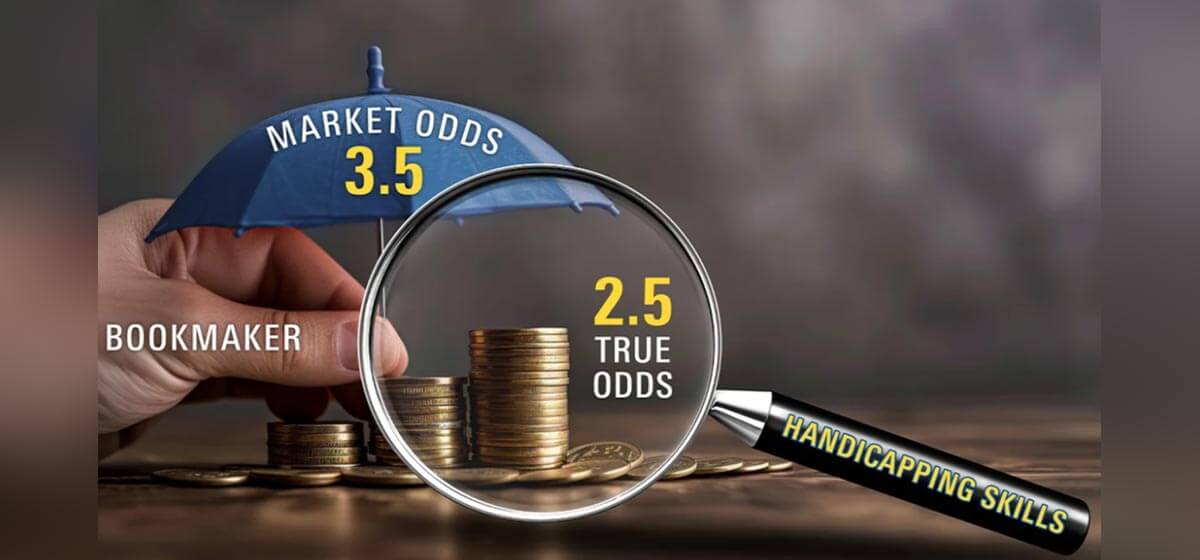
This is where you figure out if a horse represents fair value, good value, an overlay, poor value, or an underlay. The key is to compare the horse’s market odds with your true odds, which will give you a clearer picture of which horse to back to maximize your profits. Pay attention to its market odds and your true odds, as it can give you a better perception of which horse to bet and maximize your profits. Large differences between the two lead to what’s called overlays and underlays, terms you’ll often come across in discussions about upcoming races. After this, you’ll have a solid grasp on how to identify overlays and underlays in horse racing betting.
1. Understanding Value Betting in Horse Racing: The Art of Beating the Odds
Value betting sits at the core of every advanced horse betting strategy. It isn’t about who crosses the wire first most often. It’s about who crosses the wire first at the right price. Too many players get caught up chasing the horse they “like” instead of the one that’s priced wrong. Rather than simply picking the most likely winner, value betting in horse racing is about seeking those situations where the odds being offered (by bookmakers) are greater than the horse’s true chance of winning (true odds). This means your success does not depend on being right more often than everyone else. It is about being right to point undervalued horses, as the market odds are higher than expected based on your assessment.
Value betting also depends on your ability to stay objective. Emotion is the enemy of edge. The more you can detach from the horse’s name or your memories of a big run three starts back, the more clearly you’ll see the real value. Betting is business, not romance. It requires patience. Not every race will offer an opportunity. Keep records of your wagers, outcomes, and why you made your decisions. Over time, this data will sharpen your judgment and reveal the spots where you find the most value.
To achieve this, you must become both a handicapper and an odds-maker. Analyze past performances, assess each runner’s form, consider track conditions, and factor in pace scenarios and trainer patterns. Assign each horse a fair probability of winning. If you calculate a horse has a 20% shot, the fair odds are 4-1. When the board shows 8-1, you have an overlay, which is a value bet. The real discipline is in passing races when fair odds are not available, so your bankroll is always invested in positive expectation.
2. What Is an Overlay in Horse Racing—and Why It Matters to Your Bottom Line
The concept of the overlay is where the math, the hustle, and the horseplayer’s sixth sense all come together. In horse racing, an overlay is a bet where the odds on offer are greater than the true chance of that horse winning. Every seasoned player knows: you do not have to cash every ticket, but you do have to bet the right prices.
Let’s bring it down to earth. Imagine you have handicapped a field and decided a particular filly has a 25% chance of winning. That means her fair odds are 3-1. If the tote board is showing 6-1, you are not just looking at a longshot, you are looking at an overlay. That is the kind of bet where the numbers are on your side. Just remember this, it is an overlay if the market odds are significantly greater than the true odds. If you are comparing the value of a horse using probabilities, it is an overlay if the implied probability is significantly less than the true probability. Higher odds mean lower value or lower percentage (probability) to win and vice versa.
Example Comparison using Odds and Probability of an Overlay:
ODDS | PROBABILITY | ||
Market Odds | True Odds | Implied Probability | True Probability |
2.8 | 1.5 | 35.71% | 66.67% |
But overlays do not appear by accident. They happen because the crowd, driven by bias, emotion, or surface-level analysis, underprices certain horses and overhypes others. Finding overlays means doing your own homework. You build a fair-odds line for every race, assigning a percentage chance to every horse and making sure the field totals 100%. Convert those percentages to odds, then scan the board for mismatches. If you see a gap, and the market is offering more than your calculation, you fire. If not, you sit out. It is as simple and as difficult as that.
The crowd’s money is everywhere. It is chasing last-out winners, popular connections, or buzz horses with a flashy recent run. But horses coming off a tough trip, a surface change, or a smart barn switch can often be overlooked, floating to odds far above their true ability. The overlay is born in these moments, and your edge is forged in patience.
Remember, overlays are fleeting. As money pours in close to post time, your edge can disappear, so timing and decisiveness matter.
3. Value Betting Horse Racing: More Than Just Overlay Bets
If you want to get serious about value betting horse racing, you need to know how to judge the real worth of every bet you make. The previous section walked you through what is an overlay in betting, but there’s a whole world beyond that. Knowing just overlays isn’t enough if you want a full understanding of your options at the windows. When you learn how to spot all kinds of value, like fair value, good value, poor value, and underlays, you give yourself more chances to make the right call instead of being boxed into just one kind of play.
Start by comparing the odds offered by the market, which reflect the public’s opinion, with your own honest assessment of a horse’s real chances. If the odds and your estimate line up, that’s a fair value bet. You’re not gaining or losing ground, but you’re making a sound wager. Sometimes you’ll spot good value, where the market’s odds are a bit better than what you think is fair. That edge may be small, but it adds up over time. This is where an advanced horse betting strategy really pays off. It keeps you from always waiting on the perfect overlay and lets you act when there’s still a positive angle.
Just as important is knowing when to pass. Poor value shows up when the odds are a little worse than your true estimate. An underlay is even worse, with the odds much lower than the horse deserves based on your work. Chasing these kinds of bets is a quick way to drain your bankroll and feel regret after the race. If you want to get better at finding value bets, don’t put all your focus on overlays alone. Learn to recognize the full range of value and you’ll have more choices, more confidence, and a much better shot at steady, long-term success at the races.
Comparison Chart: Example of All Values
Decimal Odds | Probability | |||||
| Market odds |
| True Odds | Implied Probability |
| True Probability |
Fair Value | 2.8 | = | 2.8 | 35.71% | = | 35.7% |
Good Value | 2.8 | > | 2.5 | 35.71% | < | 40% |
Overlay | 2.8 | > | 1.5 | 35.71% | < | 66.67% |
Poor Value | 2.8 | < | 3.0 | 35.71% | > | 33.33% |
Underlay | 2.8 | < | 4.0 | 35.71% | > | 25% |
4. Why the Public Gets It Wrong: Crowd Psychology and Market Inefficiencies
If you have ever wondered why favorites are so often overbet, why the “wise guy” horse goes off at impossibly short odds, or why overlays appear in the first place, you need to understand the quirks of human nature at the betting windows. The betting public is ruled by recency bias, narratives, and the irresistible urge to follow the crowd. Favorites get pounded because bettors crave certainty. Horses with a big-name trainer, flashy win last time, or hype from the TV analyst? The public lines up to back them, regardless of what the clockers or form cycles say.
But racing is a game of chaos and nuance. The best-priced horses are often those who finished out of the money last time, encountered a tough trip, or are coming back to their preferred distance or surface. The public misses these because they are stuck on what happened yesterday, not what is likely today. Emotional swings, last-second “steam” bets, and herd behavior create pools that regularly underprice one contender and overlook another.
As a value bettor, your mission is to exploit these inefficiencies. Do not try to outsmart every handicapper in the world; instead, play against the crowd’s mistakes. That is where overlays hide, in the cracks left by collective bias. To do this well, you need a cool head and a sharp pencil. Focus on the price, not the story. Remember, it is better to win less often at bigger prices than to cash frequently at underlays.
Market inefficiencies also show up more often in big fields, maiden races, and competitive claimers where the crowd’s opinions are split and confusion reigns. That is your hunting ground. When others are distracted by noise, you zero in on value. The public will never get it right all the time, but if you stay disciplined, their missteps become your opportunity. Bet smart, ride lucky.
5. Morning Line vs. Closing Odds: Timing Your Value Bets for Maximum Impact
Here’s a common mistake: treating the morning line like gospel. It’s not. It’s an educated guess based on past performances, trainer patterns, and expected crowd behavior. But it’s just that—a guess. Anyone who has played the races for a while knows the feeling. You spot a live longshot on the morning line, love the value, but by post time, the price is gone, beaten down by a flood of late money. That is why timing your value bet is as crucial as the handicap itself. The morning line is just a track handicapper’s guess at public sentiment; the real market is made by the flow of money as post time nears.
What really matters is the final tote odds (market odds). That’s the market speaking. Watching the odds board is an art. Sometimes, you will want to lock in a price early, especially if you sense the “smart money” will find your overlay. Other times, the crowd steams the favorites and drifts your pick up to a juicy overlay in the final flashes. You cannot control the pools, but you can control when you strike.
Knowing when to place your bet is just as important as who you’re betting. Timing matters even more in big fields, weekends, or high-profile races, where public money floods in close to post time. Be ready to adapt. If your value disappears, do not chase it down to a bad price. Patience pays, and another opportunity is always just around the bend.
6. Reading the Racing Form and Watching Replays: Digging for Hidden Value
There’s more to past performances than meets the eye. If you are just reading the boldface results in the racing form, you are playing at the crowd’s level. The crowd does not win, and the crowd is who you’re trying to beat. The secret to uncovering real value lies in the subtleties of the form and the nuances that only replays reveal. Every trip tells a story. Maybe the speed figure is low, but the horse was stuck behind traffic or floated six wide into the far turn. Perhaps the finish looks dull, but the pace collapsed, and the horse was one of the only ones moving late. Great handicappers dig into every detail.
Start with the form: scan for hidden class drops, surface switches, subtle trainer patterns, and running lines that show more than meets the eye. You’ve got to ask better questions. Did the horse run against a speed or rail bias? Did it make a premature move or have to steady at a key moment? Note equipment changes or moves to a new barn; these are clues the public often misses.
Pace analysis is a weapon. Not all races are created equal; sometimes, a field loaded with speed means a closer can swoop late. Other times, a lone front-runner could steal it on easy splits. Understanding how the race is likely to unfold helps you estimate each horse’s true winning chance, and this is where overlays are born.
Class moves, equipment changes, and rider switches matter as well. A drop from allowance to claiming, a cutback in distance, or a switch to a high-percentage barn can all point to a hidden live horse. Strong recent workouts or a second-off-the-layoff pattern can be signals that a price horse is ready to pop.
Now bring in the replays. Watching the race unfold lets you spot trouble that does not make the chart: a poor break, a bad post, a rider never asking for run, or a sneaky gallop out. Horses with hidden positives, those who overcame adversity or had a legitimate excuse, are frequently overlooked in the pools and drift up to overlay status. You are not just guessing based on results, you are seeing the full story and betting with real conviction. If you want to beat the game, watch the game.
Your edge grows the more diligent your homework. Build your own trip notes and keep a log of horses you believe are better than their running line. These notes become gold the next time they show up in a similar spot at a big price.
7. The Value Formula: Calculating True Odds and Identifying Opportunities
As a beginner, you can start by directly assigning based on your assessments. Here is how to make your value line work. Start by honestly assigning a percentage chance of winning to every horse in the race, 20% for your top choice, maybe 10% for a couple more, down to the longshots, making sure it all totals 100%. Then convert those percentages to “fair odds.” For example, a 20% chance means fair odds of 4-1 (100 divided by 20). Once you have your line, compare it to what is on the board. If the market is offering you 6-1 on your 4-1 shot, that is value and time to bet.
The real magic is discipline. Log every bet, record the fair odds and the price you got, and keep tabs on your results. Over time, your records will reveal which tracks, distances, or angles suit your style, and where you might be leaving value on the table.
Another more specific ways to calculate true odds are also listed here. There isn’t a perfect formula for nailing down the exact chance each horse has to win, but the closer your process gets, the better your decisions will be. The heart of this skill is understanding how to assess each runner’s likelihood to win and then using that assessment to calculate if the odds on offer truly represent good value.
Here’s a straightforward list of steps for calculating odds and true probabilities in horse racing you can use to begin:
- Collect present and historical data on each horse, including recent form, past performances, workouts, age, weight, class, speed and pace figures, running style, pedigree, physical form, and all relevant surrounding factors like weather and track conditions.
- Use statistical models to analyze the data you’ve gathered. Methods include linear and logistic regression, decision trees, random forests, Bayesian networks, Monte Carlo simulations, and more, depending on your comfort and experience.
- Choose and utilize the right tools or software for your analysis, such as Microsoft Excel, SPSS, Python, or dedicated handicapping platforms like DRF Formulator or TimeformUS.
- Adjust for subjective factors that statistics may not fully capture. Factor in trainer intent, jockey strategy, horse behavior, paddock appearance, race pace, and possible equipment changes.
- Create a scoring or power ranking system, assigning weights to each factor based on importance, and use this to rate and rank each horse in the field.
- Convert your scores into probabilities by normalizing them, turning each horse’s score into a percentage chance of winning.
- Compare your probabilities to the market’s implied probabilities, normalize those market odds to account for bookmaker’s margin, and watch how the odds move leading up to the race.
- Refine your process through backtesting and ongoing review, making adjustments based on results and always staying updated with the latest data.
In practice, this process is what separates a casual bet from an informed wager. Using these steps helps you move beyond guessing and brings discipline to your search for value bets. For example, if your model rates a horse with a 25 percent chance to win and the market odds suggest only a 16 percent chance, you have a real reason to consider making a play. What is an overlay in betting? That concept fits here, but these steps help you recognize value in many forms, not just overlays, and keep you out of the traps set by poor or underpriced odds.
Successful value betting horse racing is not about being right every time. It’s about being systematic, knowing why you like a horse, and using an advanced horse betting strategy to stack the odds in your favor over the long run. By finding value bets with these methods, you gain more confidence in your picks, minimize regret, and make betting a game of skill rather than pure luck.
8. Finding Value Bets: Real Examples of Value Betting Horse Racing and Smart Betting Strategy
One of the best examples of value betting horse racing came in the 2011 Kentucky Derby with Animal Kingdom. Most bettors ignored Animal Kingdom because he had never run on dirt before and his route to the Derby wasn’t the usual path. However, some sharp players looked past the surface stats and recognized that his pedigree, late pace numbers, and turf form made him a real threat. Understanding what is an overlay in betting, they saw those 21-1 odds as a golden opportunity. Animal Kingdom powered home to win, rewarding those who trusted their advanced horse betting strategy and found value others missed.
Another memorable instance of finding value bets was the 2019 Kentucky Derby, when Country House crossed the wire at 65-1. While almost everyone else overlooked him, a few smart handicappers took notice of his consistent late runs and steady progression. He didn’t look like a winner on paper, but the chaos of the Derby field meant anything could happen. When Maximum Security was disqualified, Country House was elevated to first, and those who played him using value betting horse racing principles were rewarded with one of the biggest Derby payouts in recent memory.
The 2010 Belmont Stakes gave bettors another classic lesson in advanced horse betting strategy with Drosselmeyer. Despite not standing out on speed figures and coming into the race with only modest results, Drosselmeyer’s breeding suggested he would shine at the Belmont’s grueling distance. Handicappers who dug deeper and trusted their process saw an overlay and took a chance on him at 13-1. Drosselmeyer came through, proving that finding value bets isn’t just about picking favorites, but about reading between the lines and betting when your numbers say the odds are in your favor.