Horse racing blends speed, strategy, and small decisions that feel big the moment the gates open. Thanks to legal online wagering, you no longer need to stand under the grandstand clock to feel the pulse of a race. You can learn how to bet on horses online from home, with tools that help you see odds shift, review past performances, and place a bet with a few steady clicks. This long-form guide keeps things educational and practical. It explains pari-mutuel wagering in plain language, shows you where beginners often stumble, and gives you a step-by-step path to your first ticket. By the end, you will understand the system, the wagers, and the mindset that makes beginner horse betting both approachable and rewarding.
1. What Is Pari-Mutuel Betting?
Pari-mutuel wagering is the foundation of betting on horse racing online and at the track, and it works differently from fixed-odds sports betting. The term comes from French and means “mutual stake.” Instead of betting against a bookmaker, you bet into a pool alongside everyone else choosing the same wager type. There is a separate pool for Win, another for Place, another for Show, and additional pools for exotics like the Exacta and Trifecta. When the race ends, the operator takes a published percentage, called the takeout, and the remaining pool is divided among winning tickets. Takeout percentages vary by jurisdiction and by bet type, and they are posted in advance so players can make informed choices.
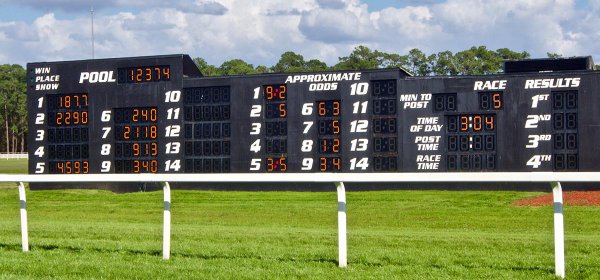
Because the system is pool-based, odds are fluid. They reflect how much money is being bet on each horse, not a fixed price quoted by the house. If heavy money pours in on a favorite, that horse’s odds drop and the payout shrinks. If the crowd ignores a contender, its odds drift upward and the potential return grows. Final odds are not known until right before the start, which is why tote boards often flicker with late changes. In practice, this means you are constantly reading the market as well as the horses.
Two concepts follow naturally from this structure. An overlay is a horse going off at odds that are more generous than its true chance of winning. If you estimate a horse has a 25 percent chance to win, that implies fair odds near 3-1. If the public lets the horse float to 6-1, you have value. An underlay is the opposite, a price that is too short for the risk involved. Spotting overlays and steering clear of underlays is a skill that grows with experience and honest record-keeping.
The last building block is understanding how payouts are expressed. In North American pools, prices are typically shown as $2 returns, which include stake and profit. A $2 Win bet that pays $14 returns your stake plus $12 in profit. Takeout and a rounding practice called breakage, which rounds down to the nearest accepted increment, affect the final figure. Once you grasp that you are betting against the crowd and not the house, pari-mutuel wagering starts to feel clear, logical, and full of opportunity for the patient player.
2. Why Online Horse Betting Is a Game Changer
Online horse betting opened the sport to anyone with a legal account, an internet connection, and a working bankroll plan. Access is the first advantage. Instead of being tied to a local meet, you can watch and wager on tracks across the country and abroad, which spreads out opportunities and helps beginners find races that fit their comfort level. The second advantage is information. Replays, live video, past performances, scratches, and odds are consolidated in one place, so you can compare a field without juggling a program, a television, and a tote board.
Convenience matters, but transparency matters more. In the United States, licensed providers operate under state racing commissions. That framework sets rules for age verification, fund handling, and bet settlement. You deposit through commonly supported methods such as ACH, debit card, or approved e-wallets, and you withdraw through secure channels that are auditable. This oversight gives beginners confidence that pools are managed fairly and that results are posted and paid according to published procedures.
Another meaningful change brought by online wagering is control. Account dashboards show bet history, net results, and time on site, which makes it easier to hold yourself to a plan. Responsible gambling tools let you set deposit limits, cooling-off periods, and reality checks. Those guardrails serve new players well, since the goal is to learn the game without letting streaks dictate decisions.
Promotions and rewards can be part of the landscape, but beginners should treat them as a bonus rather than a core strategy. It is more important to seek good betting situations than to chase incentives. The real edge in online horse betting comes from better race selection, easier research, and the ability to place a wager only when the value is there. When you combine broad access, clear data, and a disciplined approach, the screen becomes an efficient version of the grandstand, and the learning curve gets less steep with each card you study.
3. How to Set Up an Online Betting Account Safely and Legally
A safe start begins with choosing a licensed provider in your state. Racing commissions list approved advance deposit wagering operators and publish rules about who can bet and how funds must be handled. Verifying that status is not busywork. It protects your bankroll, ensures you have recourse if there is a dispute, and confirms that you are playing inside a regulated system that honors results and posts payouts transparently.
Account creation asks for personal details because operators must confirm age and identity. Expect to provide your full name, residential address, date of birth, and the last four digits of your Social Security number. Some providers use document upload and may request a driver’s license or utility bill to complete verification. This process is called Know Your Customer, and it is standard across financial and gaming industries. It prevents underage betting, blocks duplicate accounts, and keeps the system compliant with state law.
Funding your account is straightforward when you plan ahead. ACH transfers are common and typically offer the cleanest link to a checking account. Debit cards are widely accepted, as are select e-wallets. Each method has limits, processing times, and potential fees, which are posted in the cashier section. Withdrawals usually return to the original funding source or to a verified bank account. Build a habit of confirming limits and timelines before you start, because knowing when funds clear helps you schedule play and avoid forced decisions.
Security settings deserve attention on day one. Turn on two-factor authentication. Use a strong password that you do not share with other sites. Set communication preferences so you receive receipts and account alerts but not distractions that pull you off plan. Most platforms include responsible gambling tools that let you set deposit limits and timeouts. They are simple to adjust and can keep a hot streak from becoming too aggressive or a cold stretch from turning into a chase.
Once your account is live, take a breath. Explore the interface without placing a bet. Find where scratches appear, where pools are displayed, and how to reach replays and results. A few minutes of quiet familiarization pays off when the clock is ticking and the horses are approaching the gate.
4. Reading the Betting Menu: Win, Place, Show, and More
The betting menu is your first real map, and the landmarks are Win, Place, and Show. A Win bet pays when your horse finishes first. A Place bet pays when your horse finishes first or second. A Show bet pays when your horse finishes first, second, or third. Each of these wagers has its own pool, and each settles at odds that reflect how the crowd allocated money before the start. For beginners learning how to bet on horses online, these three wagers keep the rules simple while you practice race selection and value judgment.
Understanding risk and reward at this level builds good habits. Win offers the highest potential return of the three because only a single outcome cashes. Place spreads the risk across two finishing positions, so payouts are usually smaller than Win. Show spreads it further, so prices often shrink again, especially on popular horses. There is no single right choice. The right choice is the one that fits your opinion about the race and your tolerance for variance within a planned budget.
You will also see a combined ticket called Across the Board, which is a Win, Place, and Show bet rolled into one entry. It is convenient, but remember that you are paying for three separate wagers. Some players prefer to make those decisions individually, since a race that suits a Show bet may not offer fair value on the Win line.
Even at the basic level, timing can matter. Odds move late as money arrives, and a horse that looked fairly priced five minutes out can become an underlay near the bell. Watching the board while staying calm is part of the learning process. If the price collapses, pass the race and wait for a better spot. Patience is a strategy, not a delay.
These fundamentals do more than cash small tickets. They teach you to frame opinions. When you can say why you chose Win instead of Place, or why you passed a Show bet on a heavy favorite at short odds, you are already building the discipline needed for the more complex wagers that come next.
5. Beyond the Basics: Exactas, Trifectas, and Daily Doubles Explained
Exotic wagers ask you to predict more than a single finishing position, and that added difficulty is rewarded with larger potential payouts. The Exacta requires you to pick the first two finishers in order. If you like two horses clearly on top, an Exacta can express that opinion more efficiently than two separate Win bets. You can also Box the Exacta, which covers both orderings, or Key a horse on top and use several underneath to reduce cost while focusing your strongest opinion.
The Trifecta raises the bar. You must predict the first three finishers in exact order. It is harder to hit, yet a well-constructed Trifecta in a big field can return a multiple of your stake that dwarfs straight bets. Many players use a Key horse in the top slot, then spread with logical contenders in the second and third positions. Others flip the idea and key a horse in second while covering multiple winners above and below. The approach that works is the one that genuinely reflects the race shape you foresee, not the one that simply covers every possibility.
The Daily Double shifts the challenge across time. To cash a Daily Double, you must pick the winner of two consecutive races. This bet has a long history because it rewards clear opinions without demanding exact finishing orders. If your read on Race 3 and Race 4 is strong, the Double can be a cleaner way to attack than stacking several Win bets that may be priced below your estimate of fair value. Like other exotics, the Double has a separate pool that closes when the first leg starts.
As you experiment with different horse racing bets, think in terms of structure and cost. Every added horse creates more combinations, and each combination has a price. Before you click submit, look at the ticket total and ask whether the expected return justifies the spend. That small pause keeps your wagers honest. Exotic bets are exciting, but they are not a shortcut. They reward clarity, not coverage. When you play them to express a sharp opinion, they can lift your results. When you play them to force action, they can drain a bankroll faster than you expect.
6. How to Read a Racing Program: Key Info for Smarter Bets
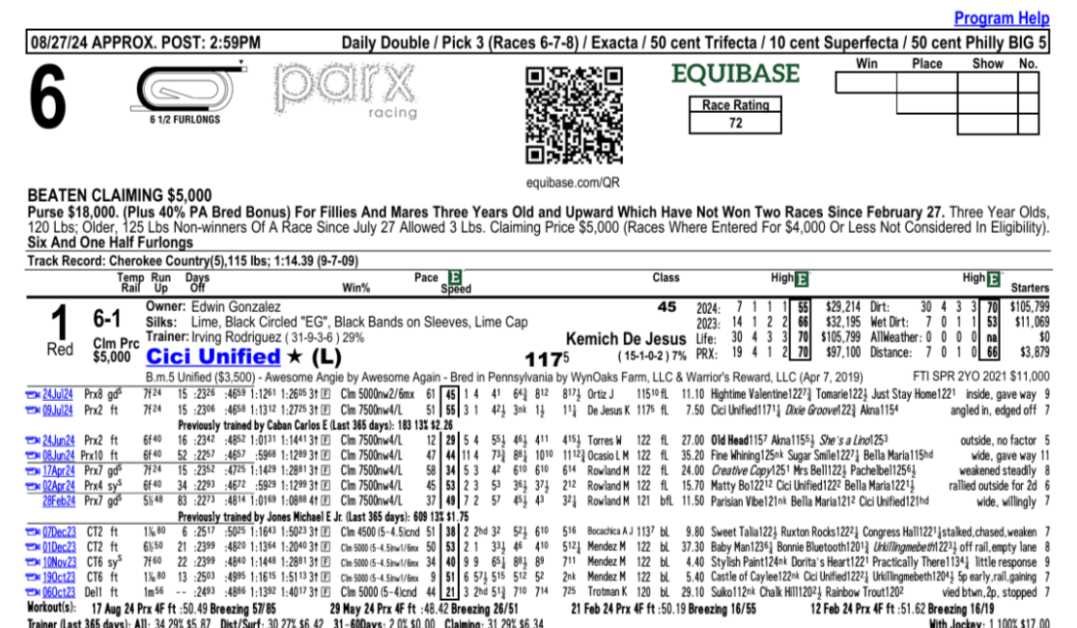
A racing program is a compact history book. Inside those lines of type are the trips, class moves, and timing patterns that separate a guess from a plan. The heart of the page is the past performance line for each horse. It shows date, track, distance, surface, class level, pace calls, final time, finishing position, and beaten lengths. Read the last few races in order and you will see a form cycle. Horses often improve in the second start after a layoff. Others jump forward when they move from a long route back to a sprint. Patterns matter more than any single number.
Speed figures condense performance into a single value adjusted for distance and track conditions. Figures help you compare horses that raced at different tracks on different days. Use them as a guide, not a verdict. A lone big figure surrounded by slower efforts might be a one-off created by a perfect setup. Two slightly lower but rising figures can be more trustworthy, especially if today’s distance and surface match those improving efforts. Looking for trend and context is how you keep the numbers honest.
Class and pace are the next edges. Class levels define the quality of competition, from maiden and claiming races up through allowance and stakes. A drop in class can wake up a horse that struggled against tougher foes, while a rise can expose a flattering result earned against weaker fields. Pace describes how the race is likely to unfold early. If several speed horses draw inside, a hot early tempo can set up a closer. If only one true front-runner is entered, that horse might control the fractions and keep on going.
Small notes fill in the picture. Equipment changes like blinkers can sharpen focus. A new jockey can signal a trainer’s confidence or a strategy shift. Post positions can matter in certain configurations, such as short sprints where the rail saves ground, or turf routes where a wide draw can force extra distance. Weather and surface changes belong in your final sweep. A turf race moved to dirt can transform the field, and a wet track may favor certain pedigrees or running styles.
Reading the program is not about memorizing codes. It is about building a story that explains why a horse will run better, worse, or the same today. When that story aligns with the price the market is offering, you have a bet worth making.
7. How Odds Work in Horse Racing (And Why They Fluctuate)
Odds in pari-mutuel wagering are a live picture of crowd behavior. They start with a morning line, which is the track handicapper’s projection of where final prices might settle, and then they move as money flows into each pool. The mechanism is simple. If a horse attracts a large share of Win dollars, its price falls. If a horse is overlooked, its price rises. Because the pools update continuously, the number you see ten minutes before the start is not guaranteed to be the number you get.
This movement creates opportunity. It also creates noise. Late money can come from big players reacting to scratches or to a projected pace scenario. It can also be public money chasing a name. Your job is to sort signal from story. When you make your own estimate of fair odds, you can see the difference between a real overlay and a tempting long shot with weak form.
Understanding displayed payouts helps you stay grounded. North American tracks traditionally post $2 Win returns after the race. Suppose you bet $2 on a winner that pays $10.60. Your profit is $8.60, and your stake was returned as part of the price. Breakage and takeout explain why returns are not perfectly proportional to pool allocations. Breakage rounds down to the nearest accepted increment, and takeout is the pre-announced percentage that covers purses, taxes, and the operator’s costs. These factors are not hidden. They are part of the published rules you agree to when you place a bet.
Odds are not predictions, and that truth keeps you calm when a price drifts against your ticket. The crowd can be right for the wrong reasons and wrong for the right reasons. Focus on building fair odds from your handicapping and take the price only when it meets or exceeds your estimate. If the horse you like collapses to an underlay in the final flashes, let it go. There will be another race. Value is the long game, and odds are the instrument you use to play it.
8. Smart Betting Strategies for Beginners: Bankroll, Value, and Observation
A strategy turns scattered picks into a plan. Start with bankroll management. Decide what you are comfortable risking for a day or week, then break it into unit sizes that keep you in action without exposing you to big swings. Many beginners use 2 to 5 percent of bankroll per race as a guide. If your bankroll is $200, a $4 to $10 range per race keeps you steady while you learn. Track every wager. Results that live only in memory tend to look better than the truth. A simple ledger reveals patterns, good and bad, and helps you improve.
Value is the engine of long-term results. Favorites win often, but their prices rarely support a profit if you bet them blindly. Create a simple fair-odds line from your handicapping. If you judge a horse to have a 20 percent chance to win, fair odds are about 4-1. If the board offers 6-1, the price is in your favor. If it offers 2-1, pass or look for a different way to express your opinion, such as a vertical play with the horse in second if the race shape suggests it.
Observation rounds out the picture. The program and figures cannot tell you how a horse is carrying itself in the paddock or on the track. Look for an even, efficient walk, a bright eye, and a coat that shines. Light sweat is normal on a warm day, but heavy lather, tail swishing, or washed-out behavior can indicate stress. Gate behavior matters as well. A horse that loads calmly and breaks sharply is giving you a small, real edge before a single number is computed.
Discipline holds these ideas together. Pass races that do not offer price and structure bets that match your opinion, not your fear of missing out. When a result surprises you, go back and watch the replay. Was there a troubled trip that you missed, a pace meltdown that flipped the script, or a class drop that deserved more respect? Each review makes the next decision sharper. Smart betting is not magic. It is patient, repetitive work that builds skill and confidence one race at a time.
9. Rookie Mistakes to Avoid When Betting on Horses Online
Beginners tend to make the same mistakes, and knowing them in advance saves money and frustration. The most common misstep is leaning too hard on favorites. Yes, favorites win at a higher rate, but the price must justify the risk. A horse at 4-5 looks safe until you realize how often it must win to keep your bankroll healthy. If your notes suggest real vulnerabilities, resist the urge to follow the crowd. Small edges come from passing short prices that do not meet your standard.
Another trap is betting every race on the card. Online access puts dozens of races within reach, which can tempt you into action for action’s sake. Professionals often handicap full cards and play only the few races where they hold a strong view. Adopt that habit early. Focus on the spots you understand, and let the other races go. Your win rate and your mindset both improve when you avoid forcing wagers.
Ignoring scratches, surface changes, and weather can undo good handicapping. A key rival that scratches may hand an easy lead to another horse and change the pace. Rain can turn turf into soft going that favors different pedigrees, or it can move a race to dirt and scramble the field. Online platforms post changes quickly, but you must check the update banners and adjust like a pro. When conditions shift, rethink the race as if you are seeing it for the first time.
Chasing losses is the mistake that ties all the others together. After a tough beat, the impulse is to double the next stake to get even. After a hot streak, overconfidence can push you into bets you would never make on a cold day. Both reactions ignore the plan you set before the races began. The cure is simple and not easy. Keep stakes fixed to your bankroll plan, review your notes, and let the next good opportunity come to you. Avoiding these rookie errors does not guarantee wins, but it creates the conditions where your best handicapping can actually pay off.
10. Placing Your First Online Bet: A Step-by-Step Walkthrough
Once your account is verified and funded, you are ready to place a first bet. Start by choosing a track and a race with conditions you understand. Maiden races with many first-time starters can be tricky. An allowance or claiming race with solid form lines is often friendlier to a new player. Click into the race and scan the field. Check for scratches, rider changes, and track condition. Watch a replay or two if they are available. Take a minute to picture the pace. Who goes to the front, who stalks, and who closes?
Settle on a wager that matches your opinion and your plan. Win, Place, and Show are straightforward ways to begin. Suppose you like the 5 horse to run a big race, but the field is competitive. A Place bet for $5 keeps you in the game if the horse finishes first or second. If you have a stronger view of the exact finishing order for two runners, an Exacta for $1 may be the better play. Keep the stake modest while you are learning. The goal is to execute cleanly and review the result, not to swing for the fences.
Open the bet slip and confirm every detail. Check the track name, race number, wager type, horse number, and stake. If you are placing an exotic, confirm whether you have boxed or keyed correctly and that the cost matches your expectation. When you click submit, the system will show a confirmation. Your bet is now in the pool.
If live video is offered, watch the post parade. Note how your horse warms up and how the riders position their mounts early. Whether you win or lose, the minutes around the race teach you a lot about pace and tactics. After the result is official, your balance updates automatically if you cashed. Take a moment to record the bet in your ledger with a quick note about why you made it and what you would do differently next time. Your first ticket is the bridge between reading about how to bet on horses online and actually doing it. Walk across it with a small stake, a clear opinion, and the patience to let the next good race come to you.