Horseplayers today are swimming in information. Past performances, pace figures, trainer stats, bias notes, replays and live odds all hit you at once before you ever place a ticket. The real problem is not a lack of data. The real problem is figuring out which pieces of that data matter to you and your style of handicapping.
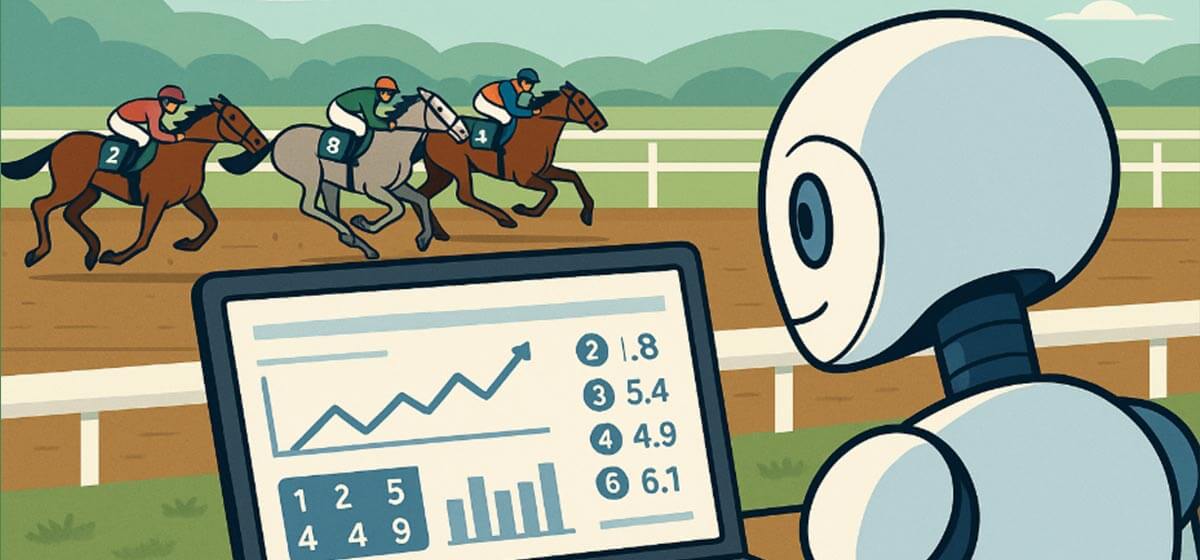
That is where a machine learning user profile comes in. Instead of treating every player like a blank slate, an AI copilot quietly watches how you actually bet. It sees which races you open first, which horses you mark as contenders, how you build Win bets, Exactas and Pick 4s, and how those choices turn out over time. Using user profile learning, it turns that record into a living model of your habits and tendencies.
The idea is not to replace your judgement with a black box. It is to pair your instincts and experience with a system that never forgets a race you have ever bet. The AI becomes the friend at the track who has kept detailed notes on everything you have done, then hands those notes back to you in a simple, useful way.
In this article, we will walk through how a machine learning user profile is built, how it learns your strengths and blind spots, how your betting history becomes training data, how the math is translated into plain English and how the whole system adapts as conditions change. By the end, you will see how an AI copilot can make you sharper without taking the fun or the final call out of your hands.
1. How Machine Learning Builds a User Profile That Mirrors Your Handicapping Style
A machine learning user profile begins with one simple job. It watches what you do. Every click, scroll and ticket becomes a small clue about how you think. When you open a card, the system notes which races you dive into and which ones you ignore. When you pull up a race, it tracks whether you linger over pace figures, recent form, class lines, trainer stats or post positions.
None of these actions mean much in isolation. Over hundreds of races, though, patterns start to appear. Maybe you consistently favor early speed in dirt sprints. Maybe you give extra credit to horses dropping out of tougher company. Maybe you are quick to toss horses stretching far beyond a distance they have ever tried. The AI does not guess at your style. It learns it by watching the choices you repeat.
Once you start betting, the profile gains more detail. When you build a Win bet, Exacta, Daily Double or Pick 3, the system can see which horses you chose and what those horses had in common. If you routinely build tickets around a particular kind of setup, such as lone speed with solid recent figures, those setups become part of your profile. They are no longer just hunches in your head. They are documented behaviors.
Your stake sizes tell another part of the story. A $5 Win bet in a quiet weekday claimer does not carry the same weight as a $50 Win and Exacta combination on a feature race where you feel you have a real edge. The AI can see where you press and where you play small. Bigger, more focused tickets signal higher conviction, so they influence your machine learning user profile more than scattered action bets.
Over time, the system begins to treat some pieces of the past performances as more important than others because you do the same thing. If you always react strongly to pace, then pace becomes a key feature in your profile. If you rarely care about certain stats, the AI learns to treat them as background. What you end up with is a model that mirrors your actual handicapping process, built entirely from your real-world behavior.
2. Why User Profile Learning Helps an AI Copilot Understand Your Strengths and Blind Spots
Once the AI has a handle on how you handicap, the next step is to see where that style works and where it does not. This is where user profile learning moves from simple observation to real coaching. It lines up your habits against your results and asks a fair question: where are you beating the crowd, and where are you falling behind.
The system starts by breaking your wagers into buckets. It can look at dirt sprints, turf routes, synthetic tracks, maiden claimers, allowance races and more. For each bucket, it compares how much you bet with how much you got back. If your Win and Exacta bets in dirt sprints show a positive return while your similar bets in turf routes bleed money, that is not a feeling. That is math.
It does the same thing with race conditions that often trip people up. If you repeatedly lose money keying low priced favorites in certain stakes, the AI will see that pattern. If large field turf sprints show a long string of misread pace scenarios and bad results, those races become part of your personal danger zone. The system is not judging you. It is simply pointing to places where history suggests you should be more careful.
Surfaces, distances and track conditions all get the same treatment. You might discover that you are very strong on wet tracks, or that you consistently struggle in short turf sprints. Many players are surprised when they see these breakdowns for the first time, because memory often highlights dramatic wins and hides slow leaks. User profile learning looks at everything, the wins and the losses, and lets the numbers tell the story.
Connections are another piece of the puzzle. If you often lean on particular trainers or jockeys, the AI can check whether those plays are actually helping you. It can see if you are overbetting a popular barn, underrating a low profile trainer who has quietly treated you well, or ignoring a jockey who fits your style.
The result is a clear map of strengths and weaknesses. You find out where your natural style lines up with profitable situations and where it runs into trouble. An AI copilot that understands this map can nudge you toward races that fit your strengths and remind you to step lightly when you wander into your own blind spots.
3. What Your Betting History Teaches the AI: Patterns, Preferences, and Play Style
Your betting history is more than a list of wins and losses. To an AI, it is a detailed diary of how you react to different cards, prices and pools. Every Win bet, Exacta, Trifecta, Daily Double and Pick 4 is a snapshot of what you liked in that moment and how much you were willing to risk on it.
One of the easiest ways to mine that diary is to look at performance by bet type. Over time, the system can calculate your return on Win bets, Exactas, Trifectas, Daily Doubles, Pick 3s and Pick 4s. Many horseplayers feel like they are at their best in multi-race sequences because those hits are so memorable. The numbers sometimes tell a different story. You might find that your most consistent profits come from Exactas or Win bets, while big horizontal scores are rare fireworks.
The AI also looks at price. It groups your main keyed horses by final odds and checks which ranges treat you well. You might be deadly accurate in the 3 to 1 to 6 to 1 band, better than average with chalk, or quietly strong with mid-priced runners between 6 to 1 and 10 to 1. Whatever the truth is, your history reveals it. This is not guessing. It is simple math carried out across hundreds of races.
Track and circuit choices add another layer. If you consistently bet more and win more at your home track, the system tags that as a place where your feel for the horses and the trainers pays off. If another track shows lighter action and weaker results, that tells a different story. The profile learns which circuits bring out your best work and which ones are more experimental.
Time matters too. Your patterns during high-profile meets might differ from quiet weekdays. Maybe you tend to press harder on big days and actually do well because you handicap those cards carefully. Maybe you overbet the hype races and perform better when the spotlight is off. The AI can see those shifts in your staking and results and fold them into your machine learning user profile.
When you zoom out, your betting history becomes a rich picture of your preferences and play style. It shows where you are aggressive or cautious, where you are sharp or shaky, and how you react when the lights are brightest. The AI uses that picture to guide you, but the picture itself is entirely drawn from real bets and real outcomes.
4. Turning Complex Data Into Plain-English Insights You Can Use at the Windows
Underneath the hood, user profile learning and prediction models can get very technical. There are algorithms weighing variables, comparing patterns and updating estimates after every race. None of that matters if the output does not make sense in the moment you need it, which is when you are looking at a race and asking yourself how to bet it.
A good machine learning user profile never dumps raw numbers on you. It talks to you like a seasoned friend at the track who has done their homework. Instead of saying, “this factor has a strong coefficient,” it says, “you have done very well in dirt sprints when you back likely lone speed, especially between six and seven furlongs.” That single sentence carries a lot of analysis inside it, but you hear it as a simple, familiar observation.
The same goes for form and class patterns. If the system sees that you have a strong record with horses who had legitimate trouble last time and now return in a slightly easier spot, it will not show you a graph. It might simply highlight a horse today and note that this situation has been profitable for you historically. That kind of feedback fits neatly into how bettors already think, so it does not slow you down.
Trainer and jockey insights can be delivered just as clearly. The AI might point out that your bets on a certain trainer second off a layoff at a particular track have produced solid results, or that your record with a certain jockey in turf routes is weaker than you might expect. It turns abstract stats into quick notes that you can actually use when you are considering a ticket.
Value and fair odds are another place where plain language helps. Rather than telling you a horse should be 3.7 to 1 on some internal scale, the system can say, “horses like this have been good for you at 3 to 1 or higher; today’s price of 7 to 2 is still in your sweet spot.” That ties the price on the board directly to your own history, which is much easier to act on than a raw probability.
In short, the heavy lifting happens in the background. What reaches you is a set of simple, concrete insights rooted in your machine learning user profile. You do not need to understand the math to benefit from it. You just need to see how it connects to real races and real decisions.
5. How Personalized Angles Emerge from Real Machine-Learned Behaviors, Not Guesswork
Racing is full of angles. Some are sharp, some are myths that linger for decades. The difference is whether they hold up when you test them over a lot of races. A machine learning user profile lets you test your own angles in a way that is objective and consistent.
The AI begins by noticing the types of horses and situations you favor. Maybe you are always interested in improving 3 year olds stretching out against slightly weaker company. Maybe you like second time starters who had trouble in their debut. Once it sees these preferences, it can gather every bet you have ever placed in those situations and check how they performed.
If your record in that setup is strong across many races, the system takes that seriously. It treats it as a personal angle that is backed by results rather than memory. If the record is weak or mixed, the AI lowers its confidence. Over time, patterns that survive this kind of testing rise to the top of your profile, while patterns that do not gradually fade into the background.
This works both with simple ideas and with more complex combinations. You might do well in dirt sprints with a certain pace shape and class move, but only at specific tracks or distances. The AI can see those combinations and still keep them grounded in real numbers. It does not need to guess whether the angle makes sense. It just needs to see whether it has made money for you.
The key is that every “personalized angle” the system surfaces is tied directly to your own machine learned behavior and outcomes. When it says, “this race looks like one where you usually have an edge,” it is not flattering you. It is comparing today’s setup to a long record of similar spots you have bet before and looking at how those bets turned out.
That is what separates this from tip-sheet style hunches. The angles are not built from someone else’s rule of thumb. They grow out of your own history, checked and rechecked by user profile learning until only the durable ones remain.
6. Adapting in Real Time: How User Profile Learning Adjusts as Track Conditions and Meet Trends Shift
Racing does not stand still. Track surfaces change with the weather and with maintenance. Jockey colonies shuffle as riders move circuits. Barns heat up, cool off and change patterns. A profile that ignores time will quickly drift out of touch with the game you are actually playing.
User profile learning handles this by leaning more heavily on recent results while still keeping the long view in mind. When you go through a winter meet on a synthetic surface and your outcomes improve, those new races carry extra weight. The AI begins to adjust its view of your abilities on that surface. It does not erase your old struggles, but it acknowledges that something has changed in how you read those races.
Track bias is another important layer. Maybe a rail bias shows up for a week, or outside lanes become the place to be during a wet stretch. The system can see how your bets react. If you catch on early and adjust your tickets, your recent results in those conditions will look better than your earlier ones, and your profile will show that adaptability. If you keep playing as if the track is neutral and lose, that also shows up.
The same is true for jockey and trainer trends. When a new rider starts getting live mounts or a stable starts placing horses more aggressively, your reaction matters. If you are quick to recognize the change and you profit from it, the AI gradually tags those situations as strengths. If those changes consistently catch you by surprise, the system will urge more caution in similar future spots.
Seasonal patterns often emerge as well. You might have better numbers during summer meets with full fields and deeper barns, and flatter numbers in thin winter cards. The AI can match your results to the calendar and treat those differences as part of your machine learning user profile. When the schedule swings back to the part of the year where you normally perform well, it can remind you that this is a time to be especially sharp.
By continuously updating based on new races, the profile acts more like a live notebook than a static report. It respects the fact that both the sport and your own skills evolve. That keeps the guidance you get from your AI copilot grounded in the racing world you are actually betting in today, not the one from a few seasons ago.
7. Spotting Repeatable Patterns: Using Your Machine Learning User Profile to Find Overlooked Opportunities
Once the AI understands your style, your strengths and the way those strengths shift over time, it can start scanning every card for races that look like good hunting grounds for you. The goal is not to find winners for you. The goal is to find situations where your past behavior suggests you see things the crowd often misses.
Mid-priced contenders are a prime example. Suppose your history shows that you generate a positive return with horses between 4 to 1 and 8 to 1 in certain pace and class scenarios. The AI can comb through new entries, find horses that fit that template and flag those races when you open the card. It is not saying “bet this horse.” It is saying “this race looks like one where you have historically found value.”
Pace patterns play a big part in this. If your profile shows that you read lone speed situations very well, the system can identify new races where one horse clearly projects to control the tempo and highlight them for you. If your edge tends to show up in hot pace setups that melt late, it can look for those shapes instead. In both cases, it is leaning on your machine learning user profile to decide which configurations matter most.
Trainer, jockey and class patterns can be added to the screen in the same way. If you have a long-term profitable record with a particular trainer’s second-start-off-a-claim runners at a given track, the AI remembers that. When a similar horse shows up, it does not guarantee a win, but it does raise a flag for you to consider.
Even smaller details, like field size and post position, can be part of these overlooked opportunities if your history supports it. You might, for example, have good results in big fields from outside posts at a specific distance and track where others tend to underrate those horses. The system can quietly push those races up your priority list.
All of this turns a long, noisy card into something more focused. Instead of treating every race as equal, you can spend more time and thought on the ones that fit your strengths and treat others as lower priority action spots or easy passes. The AI is not making those races special. Your history is. The machine learning user profile is simply smart enough to notice and remind you.
8. Balancing Your Instincts with AI Guidance for Smarter, More Confident Wagering
The real magic happens when your instincts and your machine learning user profile work together. You still do the handicapping. You still study the form, watch the replays, read the bias and listen to your gut. The AI just adds a second opinion built on every bet you have ever made.
Sometimes, both of you land on the same spot. Maybe you see a dirt sprint with a clear lone speed horse, strong current form and a price that looks fair. You feel good about building Win, Exacta and Daily Double tickets around that runner. When you pull up the race, your copilot quietly notes that this setup lines up with a pattern where you have historically shown a positive return. That agreement does not mean the horse will win, but it does tell you that you are playing into a spot that fits your game.
Other times, the AI will act like a cautious friend. You might feel tempted to chase a chaotic turf sprint with a huge field because the payoff looks juicy. Your user profile learning history might show that similar races have been a steady drain on your bankroll. A simple reminder of that fact may be enough to talk you into a smaller play, a different structure or even a pass.
The key is that you stay in control. The system does not force bets, cancel bets or decide your opinion. It offers guidance grounded in your own record and gives you reasons that make sense. Over time, that steady, honest feedback can help you trim out bad habits, lean into strengths and build a more disciplined, confident approach.
In the end, an AI copilot is at its best when it feels like a seasoned racing buddy who remembers everything and never gets emotional. Your experience, your feel for form and pace, your sense of the paddock and the board, all stay front and center. The machine learning user profile simply brings all your past decisions into the conversation, so every time you step up to the windows, you are betting with both your eyes and your history fully engaged.