1. Why Injury Risk Matters to Bettors: Scratches, Late Odds Moves, and Hidden Information
Injury risk matters to bettors because it changes the range of outcomes. A horse can be safe to race and still be less likely to win. That is the part many bettors miss. “Sound enough to compete” is not the same thing as “ready to deliver a peak effort.” In equine sports medicine, many common soft-tissue problems develop through repeated strain over time rather than one dramatic moment. That means a horse can look normal to the casual eye while still carrying fatigue or minor irritation that affects performance.
Scratches are the loudest signal, and they can be brutal if you built tickets around a single. A late scratch can also reshape pace, trip, and value across the whole field. But scratches are only one branch of the injury prevention horses story. In many cases, connections manage risk without scratching. They may proceed with a conservative plan, aiming to get the horse through the race safely rather than squeezing every last ounce of effort. That can affect where the horse sits early, whether it is asked to hold position in a tight spot, and how hard it is urged late.
This creates a natural information gap. Bettors are working with public data and visible patterns. Connections have day-to-day feedback, including how a horse trains, how it feels, and what the veterinary team recommends. The market often responds to that gap, especially late. In pari-mutuel pools, odds reflect the money that has entered, and late money frequently represents more deliberate positioning than early casual wagering. None of this means a drift equals an injury. It means odds movement prediction can serve as a risk thermometer.
Traditional handicapping tools struggle with this kind of uncertainty. Speed figures assume consistent capacity. Pace projections assume consistent intent. Injury risk makes both less stable. The bettor advantage comes from treating uncertainty as part of price. When risk rises, you demand a better number, restructure your bets, or pass. That is not paranoia. That is professionalism.
2. Training Load Analytics: How Modern Stables Measure Stress Before Breakdown
Training load analytics is a practical attempt to measure a simple reality: performance improves when training stress and recovery stay balanced, and injury risk rises when they do not. In equine performance research and in many training environments, workload is often discussed in terms of how much work is done, how hard it is, and how frequently it is repeated. What matters most is not one isolated workout. It is the pattern over time.
Cumulative stress is the key concept. Tendons and soft tissue tolerate load, then adapt, but they need time to remodel. When demanding efforts stack too tightly, micro-damage can accumulate faster than the body can repair it. Studies in equine training environments have linked abrupt increases in workload, especially spikes relative to recent baseline work, with higher injury risk. That supports a common-sense idea: sudden change is often more dangerous than steady work.
This is where bettors can learn something useful without having access to private data. Training patterns are not random. They reflect management decisions. When a horse’s routine suddenly changes, it can be a deliberate taper, a planned maintenance phase, or a response to discomfort. A taper before a target race is normal and can be a sign of smart handling. But unusual gaps, repeated maintenance works that lack progression, or a pattern that looks like “keep fit, avoid stress” can increase uncertainty about peak readiness.
Another point: stables differ. Some barns work fast and often. Others work less and race into fitness. Training load analytics helps teams understand what works for an individual horse, not what looks pretty on paper. For bettors, the goal is not to label a pattern as good or bad universally. The goal is to notice when a pattern changes for that horse or that barn.
When you see a changed rhythm, you do not need to invent a story. You simply recognize that uncertainty has increased. That is exactly the moment when price matters most. If the horse is a short price, you may choose to reduce exposure or shift the horse’s role in Exacta and Trifecta structures. If the price is fair, you may accept the risk. Either way, training load analytics gives you a grounded reason to treat training patterns as real information, not background noise.
3. How Overtraining Leads to Tendon Injuries and How Data Helps Prevent Them
If you ask horsemen how to prevent tendon injuries in horses, you will hear many opinions, but the science-backed core is consistent: tendons are vulnerable to repetitive strain, and prevention is largely about managing load and recovery. Tendons store and release energy with every stride. That is part of what makes a racehorse fast. The tradeoff is that tendons operate near their limits, especially at racing speed.
Overtraining does not always mean a horse worked too fast one morning. It can mean the workload was too frequent, the build-up was too aggressive, or the recovery was too short. In veterinary and equine sports contexts, tendon injuries are often described as arising from overstrain and micro-damage that accumulates across repeated loading cycles. That is why rest and spacing are not luxuries. They are part of conditioning.
Data helps by creating earlier visibility into risk trends. Training load analytics can identify workload patterns that are climbing too quickly or changing abruptly. Even when a horse looks fine in the morning, its workload profile might be flashing a warning that the body is being asked to adapt too fast. This is especially relevant for horses coming off layoffs, changing barns, or moving between surfaces and conditioning programs.
The bettor angle is subtle but powerful. Many preventive choices show up as schedule choices. A horse might have longer spacing between races. A horse might show a cautious series of maintenance works instead of the sharper work you expected. Connections might aim for a race that looks like a “prep,” even if the class level suggests ambition. None of these patterns prove a tendon issue. They simply reflect the reality that risk management is ongoing.
You can also see overtraining risk in form cycles. Horses often peak, then regress slightly, then rebound. That is normal. What is more concerning is a horse that peaks and then shows a steady flattening, paired with training that looks protective. In those spots, you do not have to fade blindly. You can adjust how you bet. A horse you might have singled for a Win bet can become a “use underneath” horse, or a horse you cover in a Pick 4 instead of leaning on.
This is how data-driven prevention connects to betting. It teaches you to treat “today” as a variable, not an assumption.
4. Heart Rate Variability in Horses: What Exercise Data Tells Us About Fatigue and Recovery
Heart rate variability horses monitoring is often misunderstood because people try to make it sound mystical. It is not. Heart rate variability is the variation in time between heartbeats, and it is commonly used in performance settings as an indicator of autonomic nervous system balance. In plain terms, it offers a window into how the body is handling stress and recovery.
What makes this relevant is that fatigue is not always obvious. A horse can look bright, eat well, and still carry deeper stress that affects how it finishes a race. Heart rate variability during exercise in the horse has been studied in equine sport contexts, and HRV generally decreases with exertion. That is expected. The value comes from trends and recovery patterns, not from a single number on a single day.
One of the most important bettor-friendly truths is that fitness and fatigue can coexist. A horse can be very fit and still be stressed. That is one reason trainers and performance teams watch recovery indicators. They are trying to avoid the situation where the horse can do the work, but the cost is rising risk.
HRV is also more useful when paired with training load analytics. Load tells you what the horse did. HRV suggests how the horse responded internally. A horse might have a normal workload but show signs of struggling to recover, which can prompt the team to back off. Or a horse might tolerate a heavier load well, which supports confidence.
Bettors rarely see HRV data directly. But you can see what HRV monitoring tends to influence. You may notice longer gaps between demanding works. You may notice a horse being kept fit with less intensity. You may see more conservative placement. Those are management decisions that can affect performance shape.
This is why HRV belongs in a bettor conversation. It explains a common mystery: why a horse can look perfect on paper, show up in the paddock looking fine, and still lack that final punch. Sometimes the difference is not talent. It is recovery and stress. Understanding that keeps your handicapping realistic and your bankroll protected.
5. Using Heart Rate Variability to Flag Elevated Injury Risk Before Race Day
It is important to stay grounded here. HRV is not a diagnostic test. It does not tell you, “this horse will get injured.” What it can do, in real performance monitoring, is help flag elevated stress and reduced recovery capacity. When recovery is compromised, the risk profile for soft tissue strain rises, especially in an athlete built to run at high speed under repeated load.
In equine training settings, heart rate variability during exercise in the horse is used to observe how the horse handles stress and how quickly it returns toward baseline. A persistent pattern of suppressed variability and slow recovery can prompt changes in workload. This aligns with a wider principle in sports performance: when recovery markers deteriorate, training is adjusted to prevent overload.
From a bettor’s perspective, this matters because the consequences often show up in how a horse is managed on race day. Many horses will still run if they are considered safe. The plan may simply shift. A speed horse might not be used aggressively early. A closer might be asked to make one run, but not be driven hard late. When you are betting Win, those tactical shifts can be the difference between cashing and watching your horse flatten out.
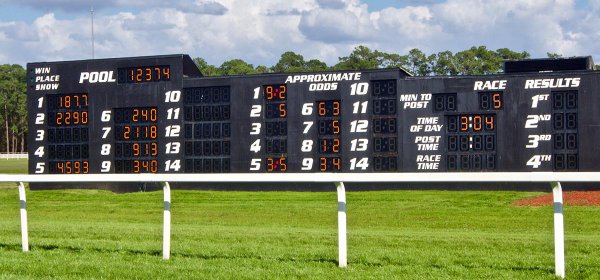
This is where the tote board becomes interesting. If the market senses uncertainty, odds can drift late. Again, that drift is not a medical report. It is a public pricing adjustment. When you see that drift on a short-priced horse, you are not obligated to follow it blindly. You are obligated to ask whether the price still compensates you for risk. That is the heart of odds movement prediction for serious bettors.
Sometimes the best response is a simple pass. Passing is a winning move in the long run. Other times you restructure. Instead of leaning on the horse as a Win key, you might use it in the second and third slots of Exacta and Trifecta plays, especially if the horse’s overall ability still makes it competitive.
The value of this approach is that it is practical and non-speculative. You are not claiming you know the horse’s medical status. You are recognizing that modern monitoring can influence management, and management influences outcomes.
6. Veterinary Decision Support Systems: How Data Guides Race Day Soundness Calls
Veterinary decision support is best understood as decision-making with better context. Veterinary teams have always relied on clinical exams, observation, and experience. What is changing is the growing use of objective tools and integrated information. That can include better imaging, sensor-based movement measurement, and structured tracking of workload history and response. The goal is earlier detection of subtle issues and more consistent risk assessment.
For bettors, the key distinction is this: veterinary decisions are primarily about safety and welfare, not maximizing win probability. A horse can be cleared to race because it meets safety thresholds, while still being less than ideal for peak performance. That is not a failure of veterinary care. It is the reality of how risk is managed in elite athletics.
Decision support tools can influence what happens even when a horse runs. A horse might be cleared with recommendations that never become public. That might involve shoeing choices, warm-up routines, or instructions to avoid a punishing drive through the lane. Those choices are made for good reasons. They can also affect how the race plays out.
Scratch timing also fits here. Late scratches happen because information changes. A horse can look fine in the morning and move differently later. Warm-ups can reveal stiffness. A horse can feel different after travel, weather changes, or the routine stress of race day. Veterinary decision support is not a single yes or no moment. It is ongoing evaluation, and late decisions are part of that reality.
This feeds directly into odds movement prediction. Pari-mutuel markets incorporate information as money enters the pool. If confidence declines late, prices drift. Sometimes that drift reflects a shift in sentiment from people who follow the sport closely. Sometimes it reflects broader public reaction. Either way, it is a signal that the market is repricing risk.
The bettor edge comes from respecting that repricing. You do not need to know why confidence changed to understand that the price might no longer be fair. When you consistently demand fair compensation for uncertainty, you stop donating money on short-priced horses that are being managed conservatively.
7. How Injury Risk Signals Influence Scratches and Late Tote Action
Late tote action makes sense once you remember what pari-mutuel odds really are: a running reflection of where the money is, updating as bets come in. That structure means information, or even just interpretation, can reshape prices in the final minutes. Injury risk signals are one of the most common reasons for that reshaping, even when no official announcement occurs.
Scratch decisions are often dynamic. Horses are evaluated repeatedly, and observations from warm-ups can change the picture. This is not drama. It is risk management in a sport that asks animals to perform at high intensity. Injury prevention horses programs aim to reduce harm, which means teams may act late if something does not look right.
But more often than scratches, injury-related uncertainty leads to cautious confidence. The horse runs, but the market is less willing to pay for it. That is when you see a favorite drift late. A drift does not prove anything. It does tell you that someone, somewhere in the market, is treating the outcome as less certain than earlier prices suggested.
It helps to remember that different pools can tell different stories. Win pools often show the clearest drift. Vertical pools can reflect a more nuanced idea: a horse might still be reliable enough to hit the board, even if bettors are less confident about a Win. This is consistent with how conservative management shows up on the track. A managed horse can still run well, but not be asked for the extra effort that wins races.
The hard part is avoiding noise. Not every late move is meaningful. Sometimes money simply floods in on another horse, and everyone else’s odds rise. That is why context matters. If you also see a changed training rhythm, a form cycle that suggests fatigue, or a pattern of conservative placement, the story becomes coherent.
A coherent story is useful. It helps you make calm decisions. You can pass, restructure, or accept the risk only at a fair price. That is how you turn late tote action from a source of frustration into a tool.
8. How to Predict Odds Movement by Tracking Injury-Related Red Flags
If you want to learn how to predict odds movement, start by separating “clues” from “conclusions.” Red flags are not proof. They are indicators that uncertainty might be higher than the public is assuming. Your job is not to diagnose a horse. Your job is to recognize when the price may not match the risk.
One reliable area to watch is pattern change. A horse that follows a steady routine and suddenly shifts rhythm deserves attention. Wider spacing between works, a run of maintenance drills, or a lack of progressive sharpening can indicate the barn is prioritizing preservation. That can be normal. It can also raise uncertainty about peak readiness.
Form cycles also matter. Many horses bounce between peak and regression. The red flag is not a single off race. The red flag is a slow flattening after a peak, especially when combined with conservative training patterns. That shape can reflect a horse being managed rather than aggressively improved.
Placement can be another clue. A drop in class can be a confidence builder. It can also be a stress management move, aiming for a smoother race and less pressure. Again, not proof. Just a reason to demand a better price.
Tactics are the race-day version of these signals. A horse that is not sent when it normally would be, or a horse that is not asked for a full drive, can be revealing. Trips can tell you more than running lines, because effort is not always obvious in final positions.
Once you have the context, you watch the tote. Odds movement prediction becomes more reliable when the market confirms the uncertainty you already suspected. If the horse is short and drifts late, you treat it as risk being priced in. That might push you away from a Win bet and toward using the horse underneath in Exacta and Trifecta plays. Or it might push you to pass entirely. The key is consistency. You are not reacting emotionally. You are adjusting rationally.
9. Finding Betting Value Before the Odds Adjust to Injury Risk
Value is not a vibe. It is the relationship between price and probability. Injury risk affects probability by widening the range of plausible outcomes. A horse you love on paper might still win, but the chance of a subpar effort increases when uncertainty rises. If the price does not compensate you for that uncertainty, the bet is not value.
Early in the day, many pools are built on public handicapping. Past performances, figures, trainer patterns, and class moves dominate. Subtle present-day uncertainty is harder to price. That can create an opportunity. If you can identify spots where a horse is being treated carefully, you can avoid short prices that are likely to get worse late, or you can take a better price before the market fully reacts.
But the market can also overreact. Late drift sometimes creates value if the move is excessive. The question becomes whether the final number is now fair compensation for the risk. If the horse is still the most likely winner and the odds drift into a range that makes sense, you may decide the risk is worth taking. This is not about stubbornness. It is about pricing.
The smartest bettors also adjust structure, not just opinion. If a horse looks like a candidate for conservative management, it may still be likely to hit the board. That can shift you toward using it underneath. An Exacta that keys a stronger finisher on top with the managed horse in second can sometimes be a better expression of the risk profile than a straight Win bet. The same is true in Trifecta construction.
In multi-race wagers like Pick 4 and Pick 5, uncertainty is magnified. A single with hidden risk is a fragile foundation. Adding coverage can be the difference between staying alive and tearing up a ticket early.
When you consistently treat uncertainty as something you must be paid for, you stop overpaying. That is how value is found, not by being psychic, but by being disciplined.
10. Putting It All Together Without Playing Veterinarian
The biggest mistake bettors make with this topic is thinking they must become amateur vets. You do not. In fact, you should not. Your edge does not come from claiming you know what is wrong with a horse. Your edge comes from understanding how modern injury prevention horses practices influence public patterns, and how those patterns interact with market behavior.
Training load analytics, as discussed in equine performance research, centers on balancing workload and recovery and avoiding abrupt spikes that increase risk. Heart rate variability horses monitoring is used in equine sport contexts to understand autonomic stress and recovery trends, especially as they shift with exercise. Veterinary decision support is increasingly shaped by objective tools and integrated information that can help detect subtle issues and guide risk management. These are real directions in the sport and its surrounding performance infrastructure.
Once you accept that reality, the bettor approach becomes simple. Start with your handicap the same way you always do. Identify the most likely winners, the pace picture, and the value. Then add a risk lens. Does this horse have a pattern that suggests careful management? Did the training rhythm change in a way that increases uncertainty? Does the form cycle look like a horse being protected rather than pushed?
Then, use the tote as confirmation, not as a replacement for thinking. If a short-priced horse drifts late, you do not need to panic. You just need to ask if the price still makes sense. If it does not, you pass or restructure. If the number grows into a fair range, you may accept the risk.
That is what odds movement prediction should be for bettors. A way to respect uncertainty and avoid bad prices. The tote board will never tell you everything, but it often tells you when confidence has shifted. When you stop fighting that truth and start pricing it into your bets, you move from guessing to managing.
And in a game where one thin decision can empty a bankroll faster than a horse empties the tank in deep stretch, managing is winning.